The Evolution of Artificial Intelligence: From Concept to Reality
Introduction
Artificial Intelligence (AI) has long fascinated scientists, philosophers, and innovators. Once considered a futuristic idea confined to science fiction, AI is now part of our daily lives — from voice assistants and recommendation systems to autonomous vehicles and advanced medical diagnostics. This transformation from concept to reality is the result of decades of research, experimentation, and technological progress.
Early Concepts — The Philosophical Foundations
The roots of AI trace back thousands of years when philosophers debated the nature of intelligence and the possibility of creating artificial beings. Ancient myths such as the Greek tale of Talos, a bronze automaton, and early mechanical inventions like Hero of Alexandria’s automata foreshadowed humankind’s desire to build intelligent machines.
In the 17th century, thinkers like René Descartes and Thomas Hobbes proposed that human reasoning could be reduced to mechanical processes. Later, George Boole’s work on logic and Alan Turing’s groundbreaking question, “Can machines think?” laid the intellectual foundations for modern AI.
Birth of AI as a Scientific Field (1940s–1950s)
The mid-20th century marked the beginning of AI as a formal discipline:
- 1943: Warren McCulloch and Walter Pitts developed the first mathematical model of artificial neurons, the precursor to neural networks.
- 1950: Alan Turing introduced the Turing Test, a benchmark to evaluate whether a machine can exhibit human-like intelligence.
- 1956: The Dartmouth Conference, led by John McCarthy, Marvin Minsky, Nathaniel Rochester, and Claude Shannon, officially coined the term Artificial Intelligence. This event is considered the birth of AI as a research field.
See also: How Emerging Technologies Are Shaping the Future of Work
The First Wave of AI (1950s–1970s)
During this period, AI researchers built programs that could solve algebra problems, play games like checkers, and prove theorems. Optimism was high, and many believed machines would soon rival human intelligence.
Notable developments:
- Early expert systems designed to simulate human decision-making.
- Programs like ELIZA (1966), one of the first natural language chatbots.
- Early robotics research combining AI with mechanical engineering.
However, computing power was limited, and the technology struggled with scaling. This led to the first AI Winter, where funding and enthusiasm declined.
The Rise of Expert Systems (1980s)
AI regained momentum in the 1980s with expert systems — programs that used large rule-based knowledge to make decisions in narrow domains. Businesses adopted these systems for diagnostics, financial analysis, and industrial processes.
Examples:
- MYCIN, a medical diagnosis system.
- AI applications in manufacturing and customer service.
Yet, expert systems were expensive to maintain and lacked flexibility, leading to another slowdown in AI enthusiasm.
Machine Learning Revolution (1990s–2000s)
The emergence of machine learning (ML) changed the trajectory of AI. Instead of hardcoding rules, ML allowed computers to “learn” patterns from data.
Breakthroughs included:
- Support Vector Machines (SVMs) and decision trees for classification tasks.
- Speech recognition advances by companies like IBM and Dragon Systems.
- Autonomous robotics progress, including NASA’s Mars rovers.
The rise of the internet provided vast amounts of data, fueling ML algorithms and statistical models.
The Deep Learning Era (2010s–Present)
AI entered a golden age with deep learning, driven by powerful GPUs, massive datasets, and innovations in neural networks.
Key milestones:
- 2012: AlexNet revolutionized computer vision by winning the ImageNet competition, demonstrating the power of deep neural networks.
- 2016: Google DeepMind’s AlphaGo defeated world champion Lee Sedol in the complex game of Go — a landmark in AI achievement.
- Natural Language Processing (NLP): Models like BERT, GPT-series, and ChatGPT transformed text generation, translation, and conversational AI.
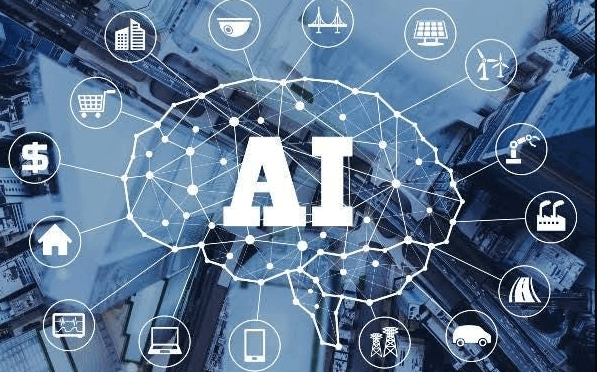
Today, AI powers virtual assistants (Siri, Alexa), self-driving cars, fraud detection, healthcare diagnostics, and personalized recommendations on platforms like Netflix and Amazon.
AI in Everyday Life
What was once science fiction is now commonplace:
- Healthcare: AI assists in early disease detection, drug discovery, and personalized treatments.
- Finance: Fraud detection, algorithmic trading, and customer service chatbots.
- Education: Personalized learning platforms adapt to students’ needs.
- Business: Automation of workflows, customer support, and predictive analytics.
Challenges and Ethical Considerations
Despite its success, AI raises important questions:
- Bias and fairness: AI models can inherit biases from training data.
- Privacy: The use of personal data for AI systems sparks debates about surveillance.
- Job displacement: Automation threatens traditional roles, requiring reskilling.
- Ethical AI: Calls for transparent, explainable, and responsible AI are growing worldwide.
The Future of AI
Looking ahead, AI will continue to evolve through:
- General AI research: Moving from narrow applications to more human-like reasoning.
- Human–AI collaboration: Tools designed to augment human creativity and decision-making.
- Integration with other emerging tech: AI combined with robotics, quantum computing, and biotechnology will redefine industries.
- Ethical frameworks and regulations: Global efforts will shape responsible AI deployment.
Conclusion
The journey of Artificial Intelligence — from a philosophical concept to a transformative reality — reflects human creativity, persistence, and ambition. While challenges remain, AI is no longer just a futuristic dream; it is a powerful tool shaping how we live, work, and innovate. The next chapter will depend on how humanity chooses to guide its development — responsibly, ethically, and inclusively.